Insights

Battery storage, read in context

Market analysis, regulatory updates and strategic perspectives on battery energy storage across the Nordics, Baltics and wider Europe.

Market Analysis

Every Bid Names Its Floor: Nordic Balancing Capacity Auctions Flip Their Default in November

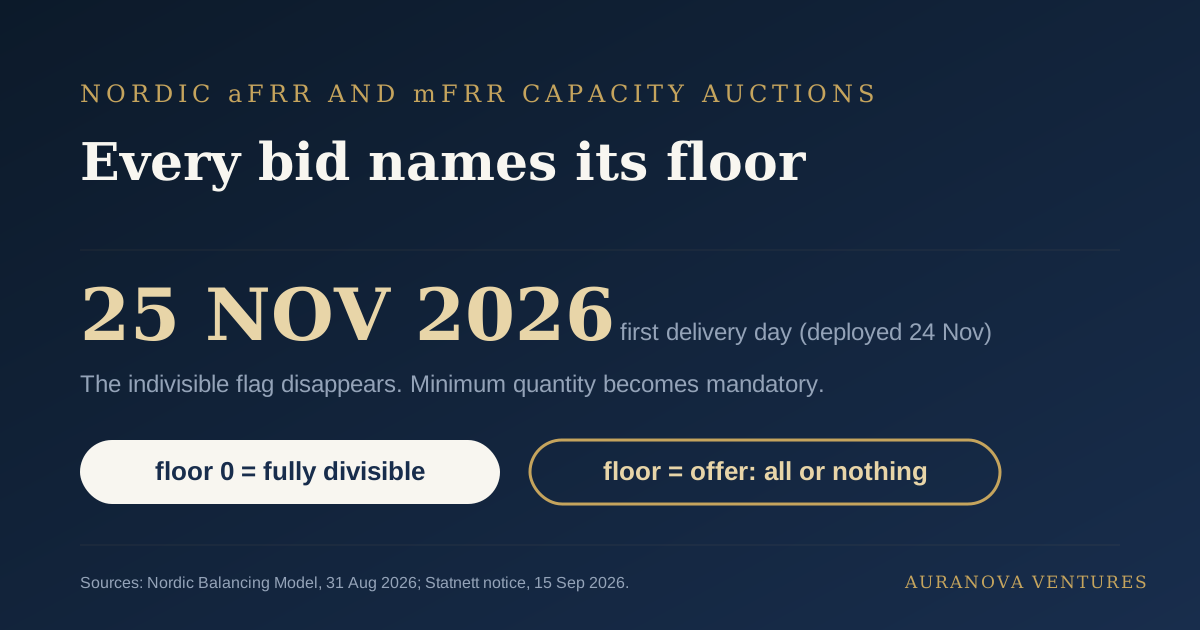
On 24 November the four Nordic system operators change how their balancing capacity auctions read a bid. The indivisible flag disappears and the minimum quantity field, until now optional, becomes mandatory for every bid. Bids that omit it are rejected, which is how the test environment open since 15 September already behaves. All-or-nothing bidding survives, but only as an explicit choice. The question for revenue models is how much of today's indivisibility was ever a choice at all.

17 September 2026 · 8 min read
Regulation

Sweden Rewired the Grid Fee. The Battery Line Is Still Being Written

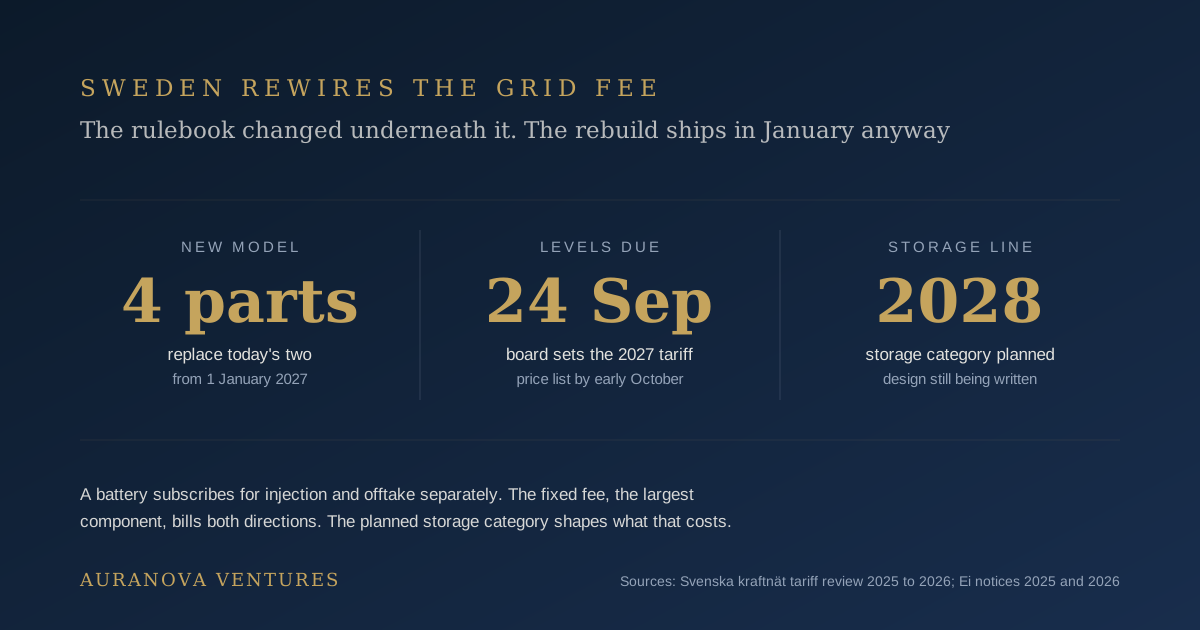
On 24 September Svenska kraftnät's board is due to set the remaining 2027 levels of a transmission tariff rebuilt from two components into four, live from 1 January. The rule that shaped the rebuild was repealed in June. The rebuild ships anyway. The network-expansion power fee is already set at 0 kr/kW, a voltage-regulation payment arrives in 2028 and a storage customer category is planned by 2028. For a battery the open questions are worth more than the settled ones.

15 September 2026 · 8 min read
Regulation

The Two-Megawatt Lane: Norway's Prequalified Reserve Market and Hydro's Funded Head Start

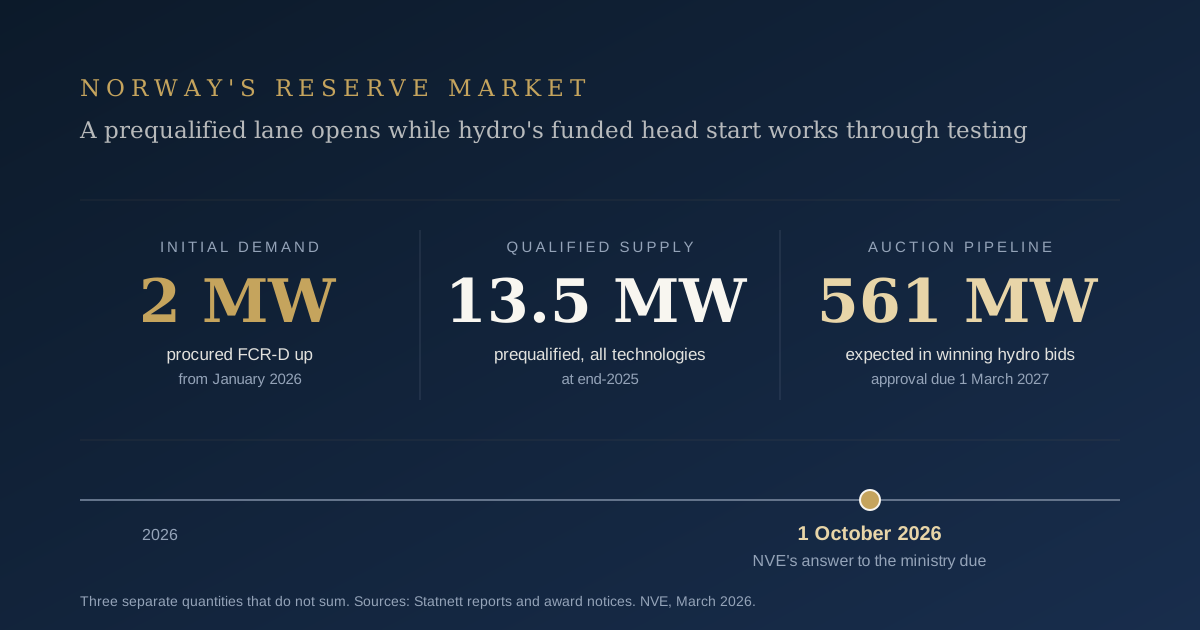
In January Statnett opened Norway's first year-round auction lane for FCR-D up, the fast frequency reserve, restricted to prequalified assets. It opened at 2 MW, forecast to reach roughly 10 to 50 MWh/h by year-end. Meanwhile Statnett has awarded funding toward prequalifying an expected 561 MW of FCR-D up, with approval due by March 2027. The award lists name hydropower generators, not batteries. Add a new ceiling on prequalification below 110 kV and a battery licensing review due at the ministry on 1 October and Norway's battery entry question comes down to one quarter.

10 September 2026 · 8 min read
Market Analysis

The Hedge Sits Out 2027: Fingrid Skips Finland's FCR Yearly Market

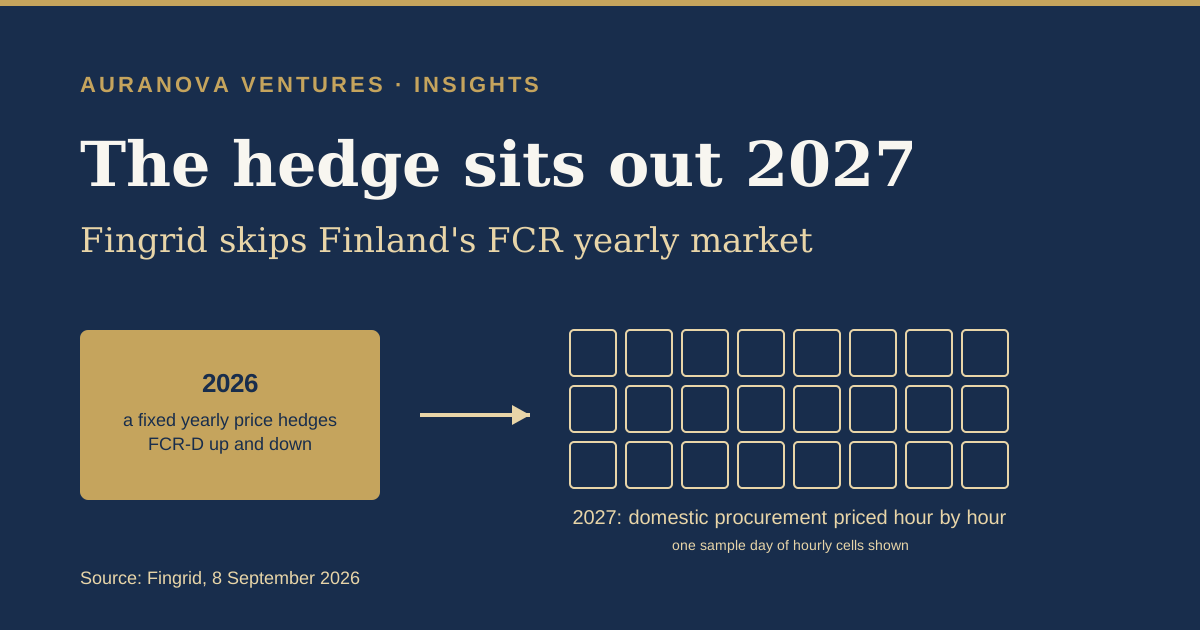
On 8 September Fingrid announced that it will buy no frequency containment reserves from its yearly market for 2027. The yearly market appendices expire on 31 December 2026 and from 1 January Fingrid's domestic FCR procurement runs through the hourly market alone, one marginal price per product per hour. The yearly market was the one fixed-price channel in that procurement and its 2026 FCR-D prices, fixed a year in advance, annualise to about 31,000 and 53,000 euros per MW if maintained every hour. From 2027 that certainty becomes a forecast and forecast quality becomes the asset.

8 September 2026 · 8 min read
Market Analysis

No Date, Only a Window: The Nordic Link to Europe's mFRR Market Slips Toward Autumn 2027

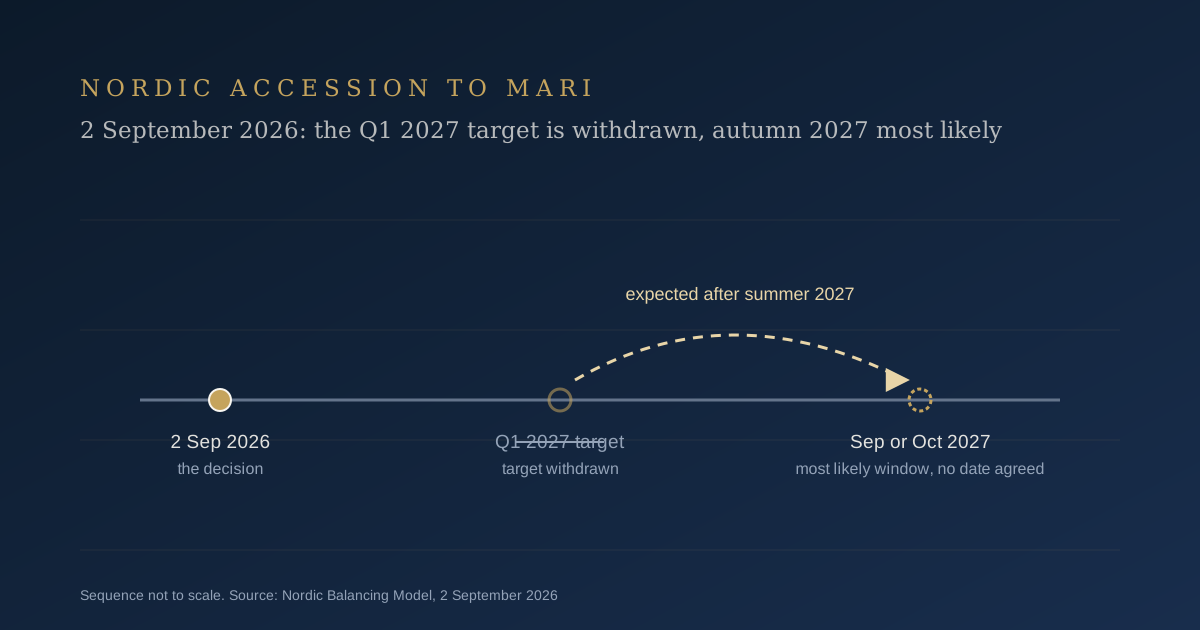
On 2 September the four Nordic system operators withdrew Q1 2027 as the target for connecting the Nordic balancing market to MARI, Europe's platform for manual frequency restoration reserve. No new date is agreed; September or October 2027 is their most likely window. Two months earlier they had reconfirmed Q1. For a battery earning mFRR energy revenue in Sweden or Finland, the competitive fence around the Nordic bid pool is now expected to stand into next autumn. That belongs in revenue models today.

3 September 2026 · 8 min read
Regulation

308 MW in Finland, 315 MW in Sweden: The Static FCR-D Caps Now Have Numbers

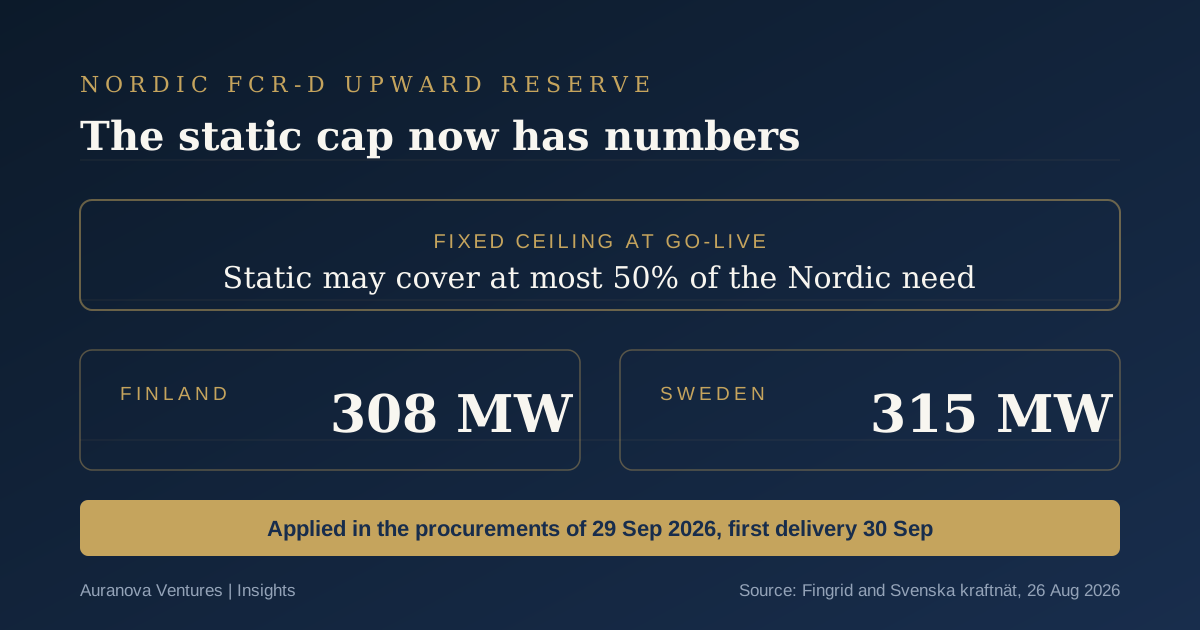
On 26 August the Nordic system operators published the operating numbers for the cap on static FCR-D upward reserve: applied from the procurements of 29 September for first delivery on 30 September, a fixed ceiling of 50 per cent of the Nordic need and national caps of 308 MW in Finland and 315 MW in Sweden. Finland's cap sits one megawatt below its national obligation. Sweden's sits about 105 MW below its prequalified static book. Same rule, different binding conditions.

1 September 2026 · 8 min read
Regulation

Fences, Firewalls and a 200 MW Cap: Finland Rewrites the Terms of Reserve Revenue

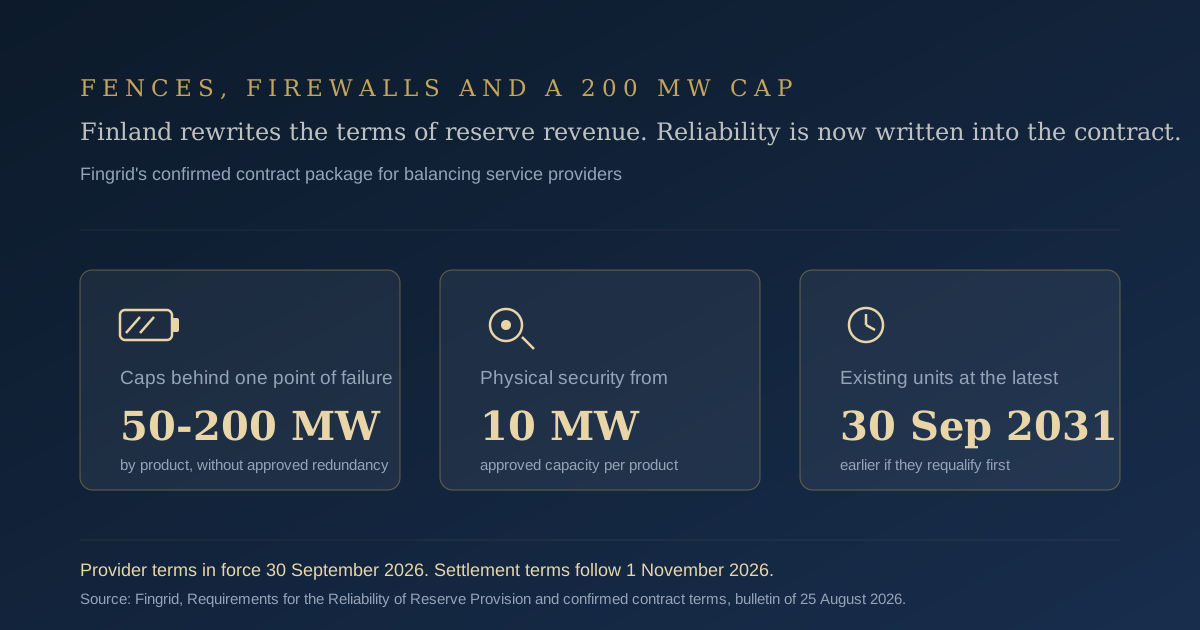
From 30 September, Fingrid's confirmed contract terms give Finland's reserve markets a formal reliability rulebook. Reserve behind any single point of failure is capped, from 50 MW for the fastest product to 200 MW across all products together. Providing units and control systems with 10 MW or more of approved capacity in a product need alarms, cameras and a 24/7 security centre. Newly approved units comply from day one; units approved earlier comply when they next requalify, by 30 September 2031 at the latest. The auctions still price the megawatts. These terms decide which megawatts stay eligible to bid.

27 August 2026 · 8 min read

Regulation

Romania's 150 Million Euro Storage Auction Turns on One Number

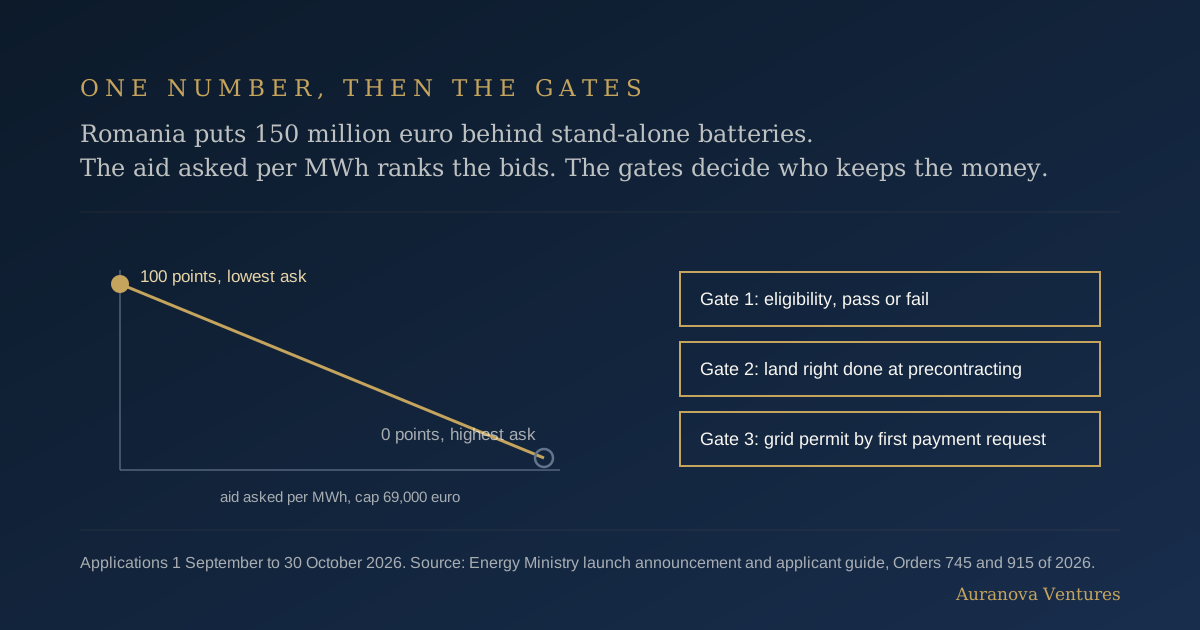
Romania's Energy Ministry approved the final rulebook for its 150 million euro stand-alone battery programme on 14 August. Applications run from 1 September to 30 October and one number ranks them: the state aid requested per MWh of storage, capped at 69,000 euro. The ranking is only the start. Pass or fail gates on land, eligibility and grid connection decide who keeps the money. The grid permit is not required to bid.

20 August 2026 · 9 min read

Regulation

One Battery, Three Grid Bills: How Fingrid Proposes to Reprice Storage for 2029

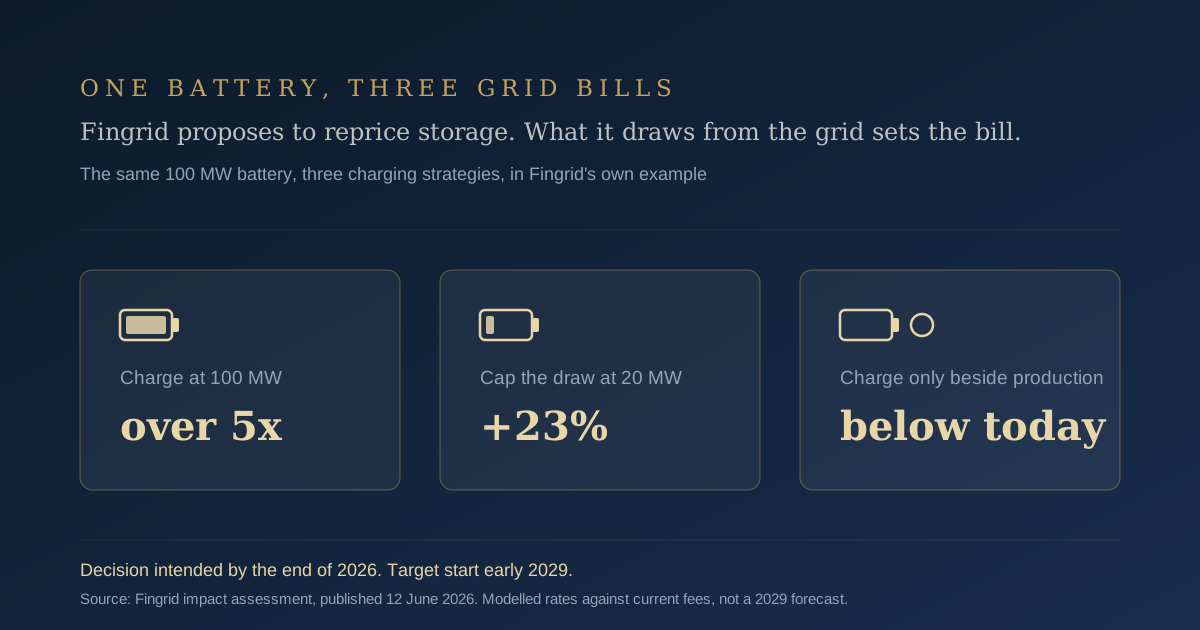
Fingrid's proposed main grid tariff prices the same 100 MW battery three ways: more than five times today's grid fee at full charging power, 23 per cent above it when charging is capped and below it when the battery never charges from the grid. The figures are Fingrid's own worked example, its modelled rates on 2024 data set against today's fees; 2029 unit prices are not set. Fingrid intends to decide by the end of 2026 on a structure targeted for early 2029. Grid draw would become a design parameter with a price on it.

13 August 2026 · 9 min read

Market Analysis

The Danube Stress Test: One Drought, Two Battery Fleets, Two Price Outcomes

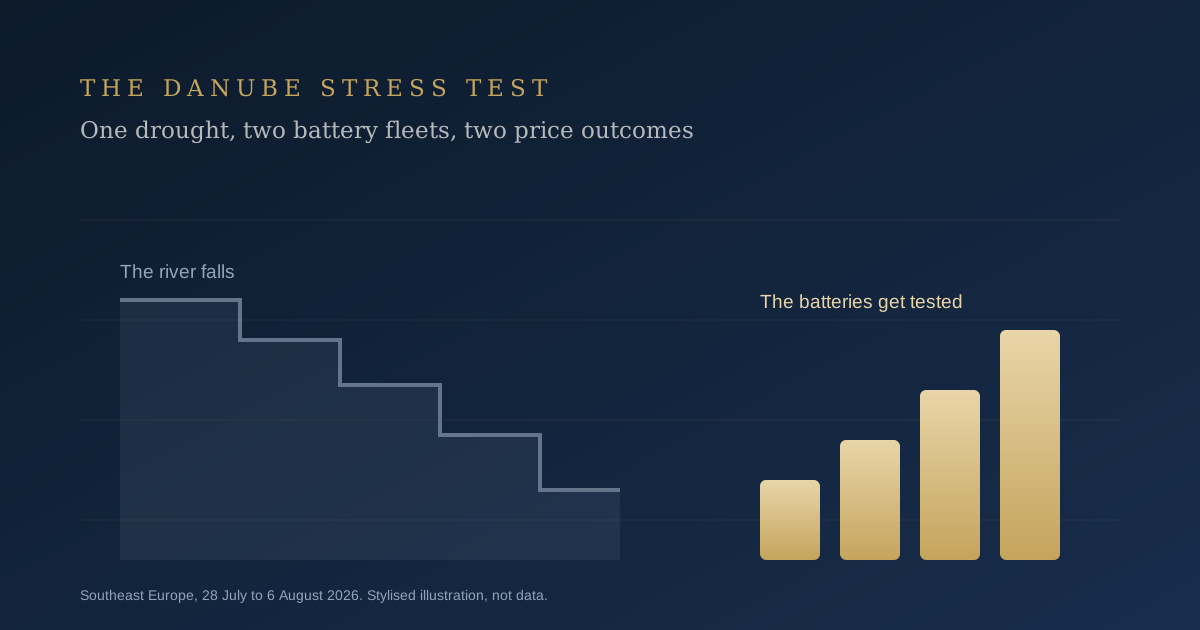
On 28 July Romania disconnected a roughly 700 MW nuclear unit because the Danube fell to a level its operator called unprecedented. Within a week, evening wholesale prices across Southeast Europe spiked as high as 717 euro per MWh. Bulgaria, holding the world's biggest battery fleet relative to system size, stayed among the region's cheapest markets. Romania's fleet, less than a third the size, pushed about 600 MW into the peak while its nuclear operator covered contracts with imports. The drought stress test of the battery era has results worth modelling.

11 August 2026 · 9 min read

Regulation

The Nordics Cap Static FCR-D in September. Check Which Side of the Line Your Megawatts Sit On.

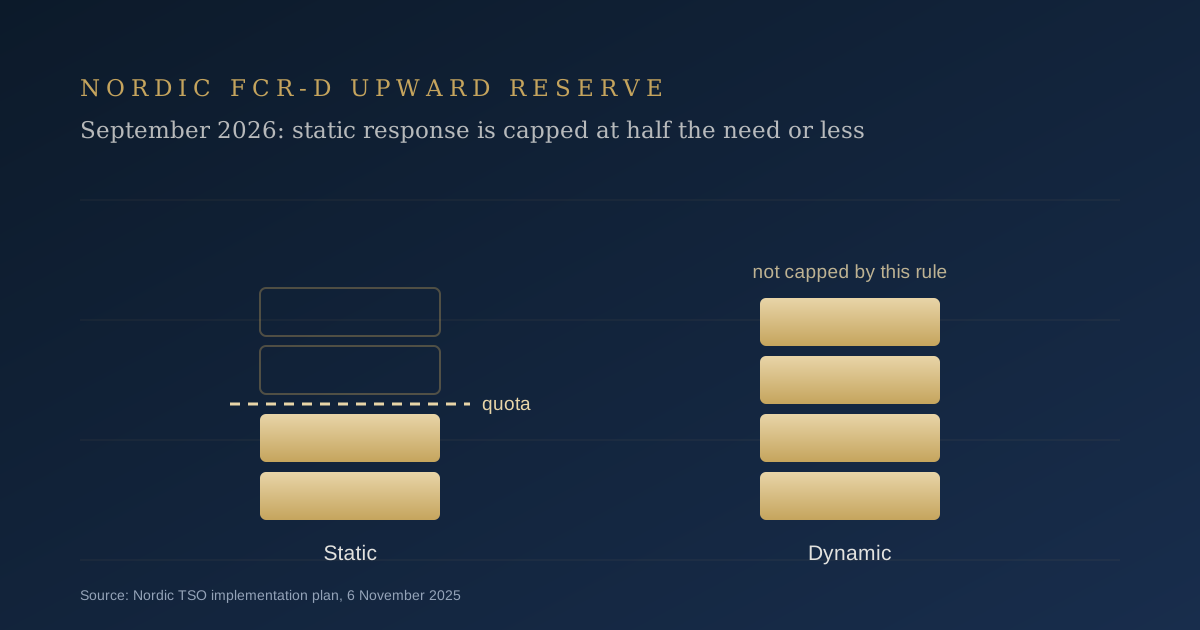
From September 2026 the four Nordic system operators will buy no more than half of the region's upward disturbance reserve, in aggregate, from the static class, the FCR-D variant with simplified technical tests. Dynamic prequalification exempts an asset from the quota. Under Statnett's proposed mechanics, a static bid can be rejected while priced in merit once a quota fills. The binding level arrives with the national quotas, still unpublished.

6 August 2026 · 8 min read

Market Analysis

What Fingrid's 77 Percent Fee Cut Actually Tells Finnish Battery Owners

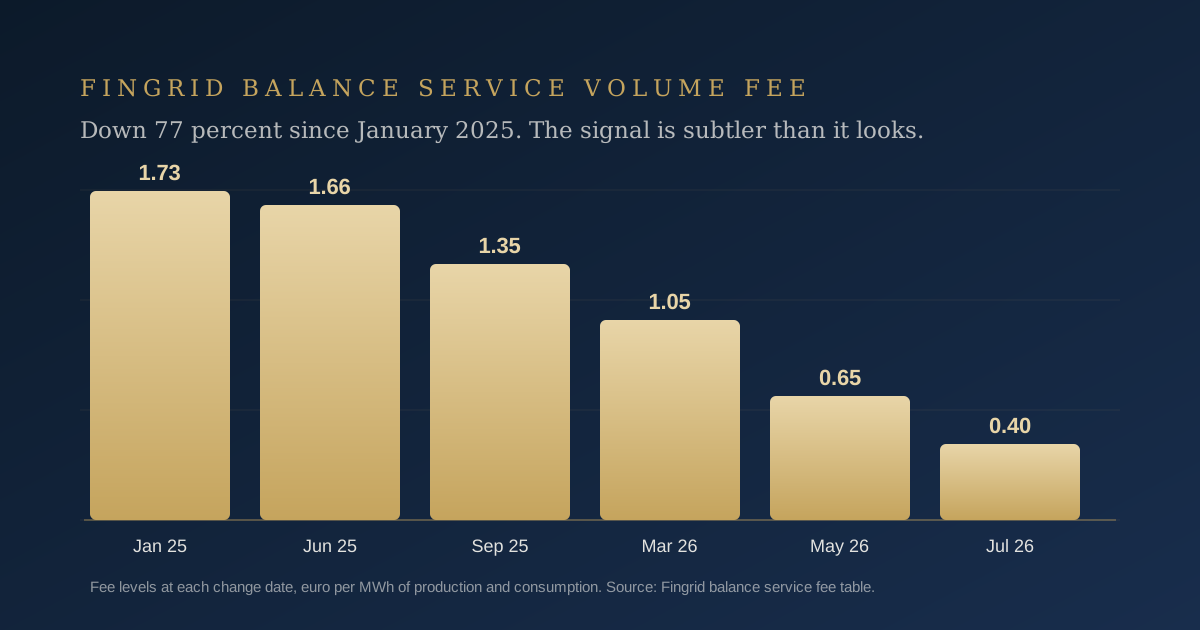
Fingrid's balance service volume fee has fallen from a 1.73 euro peak to 0.40 euro per MWh. It is tempting to read that as the batteries-ate-the-reserves story. Fingrid's own cost allocation says the signal is subtler and more useful for anyone underwriting a Finnish revenue stack.

5 August 2026 · 9 min read

Regulation

Bulgaria Selected 13,700 MWh of Batteries for Grants. Its Minister Puts First-Round Payouts at About 6 Per Cent.

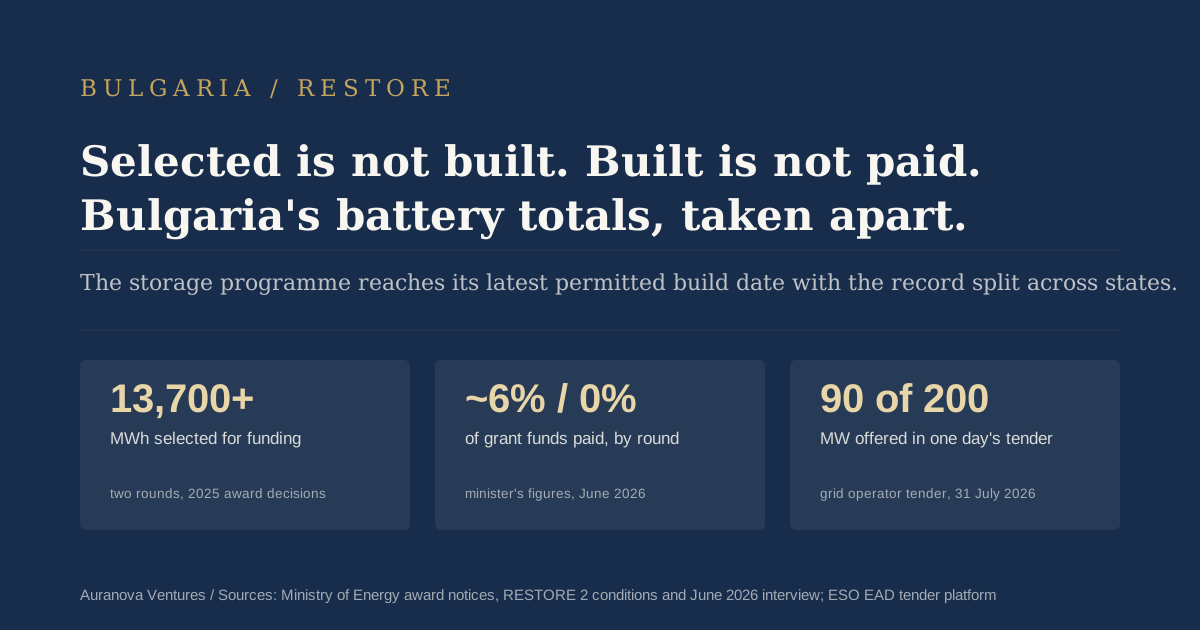
RESTORE 2, the second round of Bulgaria's recovery-plan storage programme, reaches its latest permitted build date on 31 July. In June the energy minister put payments under the first round at about 6 per cent and under the second at nothing. The day before the deadline, the grid operator's daily reserve tender drew offers covering less than half its requirement and its rules kicked the shortfall to designated providers. Selected, built and paid are three different numbers.

31 July 2026 · 10 min read

Regulation

Kraftlyftet Can Co-Fund Your Battery. Read the 75 Per Cent Rule Before You Count On It.

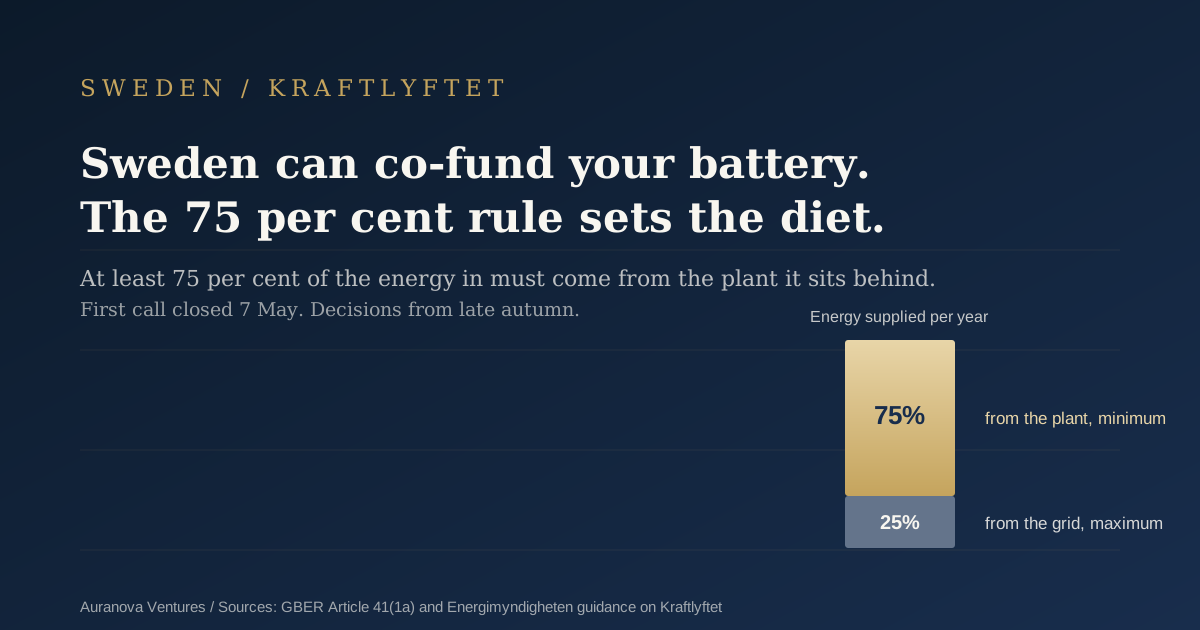
Sweden's first Kraftlyftet call closed about three times oversubscribed. In the government's June snapshot most applications were mainly battery storage. The support is real but bounded twice: a ceiling of 30 per cent of eligible cost (40 or 50 for medium and small companies) and never more than the gap that makes the project viable. The condition is a diet. The battery must sit inside a renewable plant's own connection and take at least 75 per cent of its yearly energy from that plant.

28 July 2026 · 8 min read

Regulation

Denmark's Grid Bill Would Rank Storage Third. Grid-Friendliness Is the Lever.

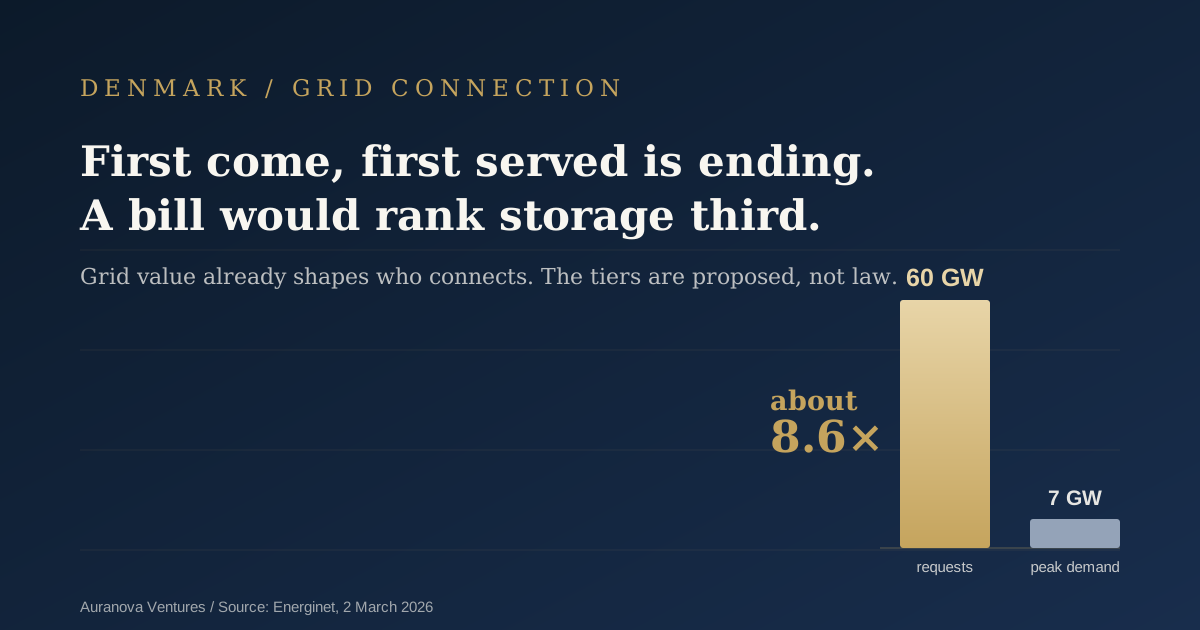
Denmark has about 60 GW of connection requests against a system that peaks near 7 GW. First come, first served is ending. Energinet's live model for larger connections already weighs grid-friendliness. A proposed law, not yet passed, would rank storage in the third of four tiers with the power to make it wait or turn it away.

23 July 2026 · 8 min read

Regulation

Finland Is Turning Flexibility Into a Building Code

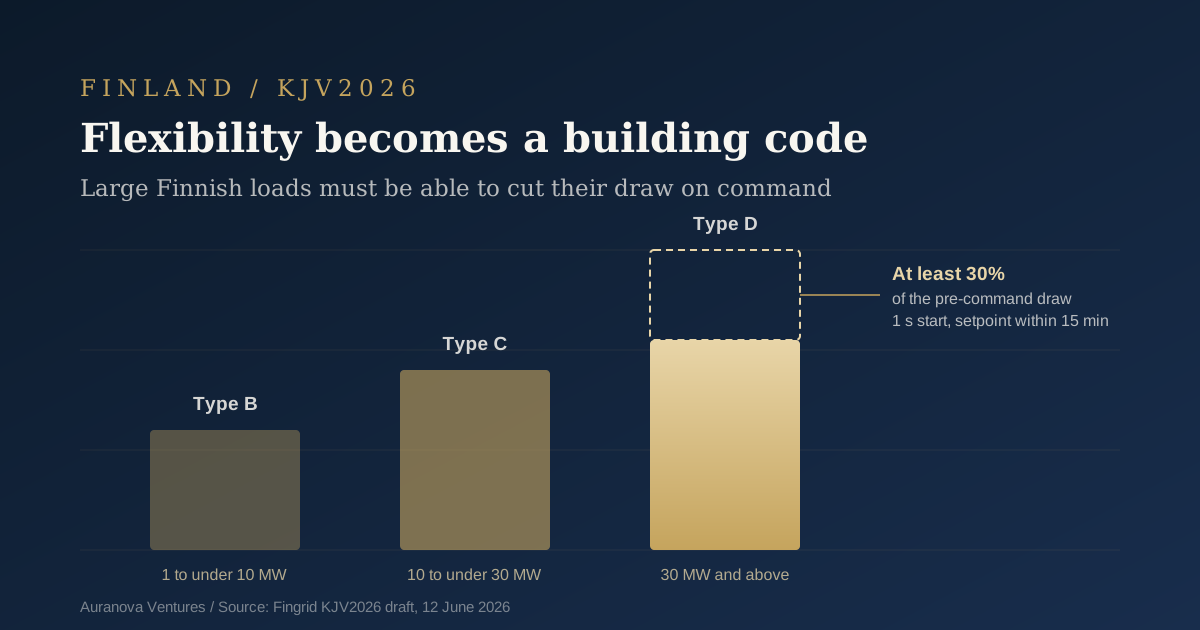
Fingrid's draft KJV2026 requires large new Finnish loads to shed at least 30 percent of their draw on command. Read the spec before calling it battery competition: the setpoint can take 15 minutes and the capability points one way.

21 July 2026 · 7 min read

Market Analysis

Batteries Pay to Use the Grid Twice. Europe Is Unwinding That in 2026

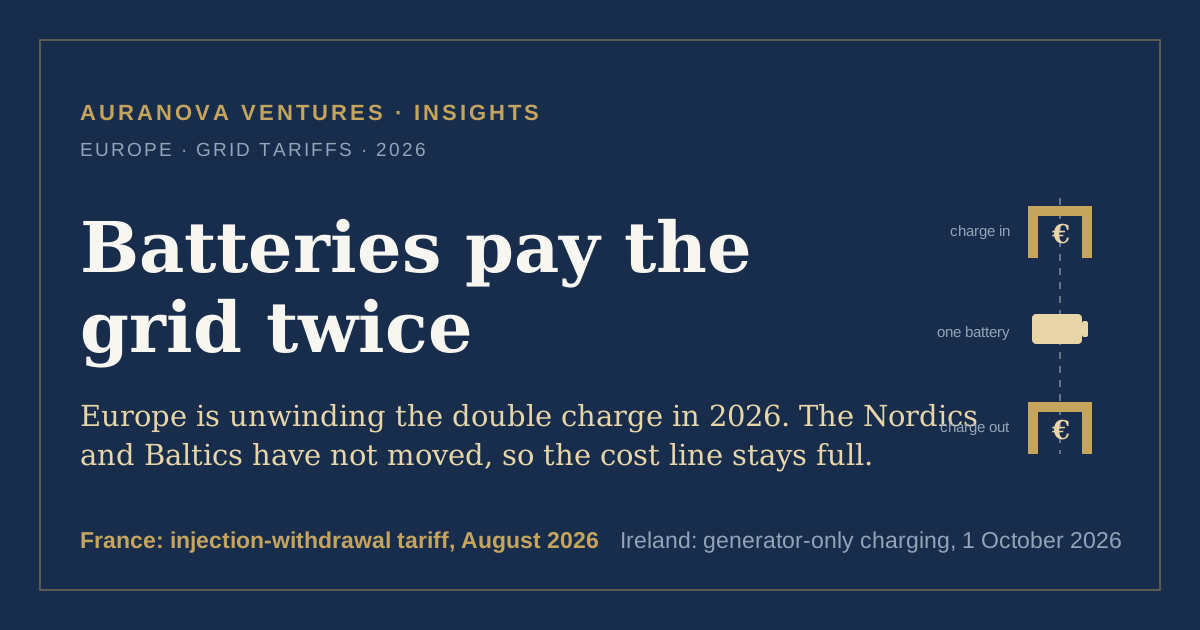
France cuts storage grid fees in August, Ireland follows in October and the EU principle is already law. The Nordics and Baltics have not moved, so the grid-fee line stays full. Here is what that does to a BESS model.

14 July 2026 · 7 min read

Market Analysis

Romania Just Made Grid Access an Auction. Batteries Have to Win It

Romania has EUR 150 million in battery grants and a queue of 81 GW behind 1,407 permits. From 2026 it stops handing out grid access first-come and auctions it. The money was never the hard part. The grid is.

9 July 2026 · 8 min read

Market Analysis

The Baltic Battery Window Is Open. The Clock Is Running.

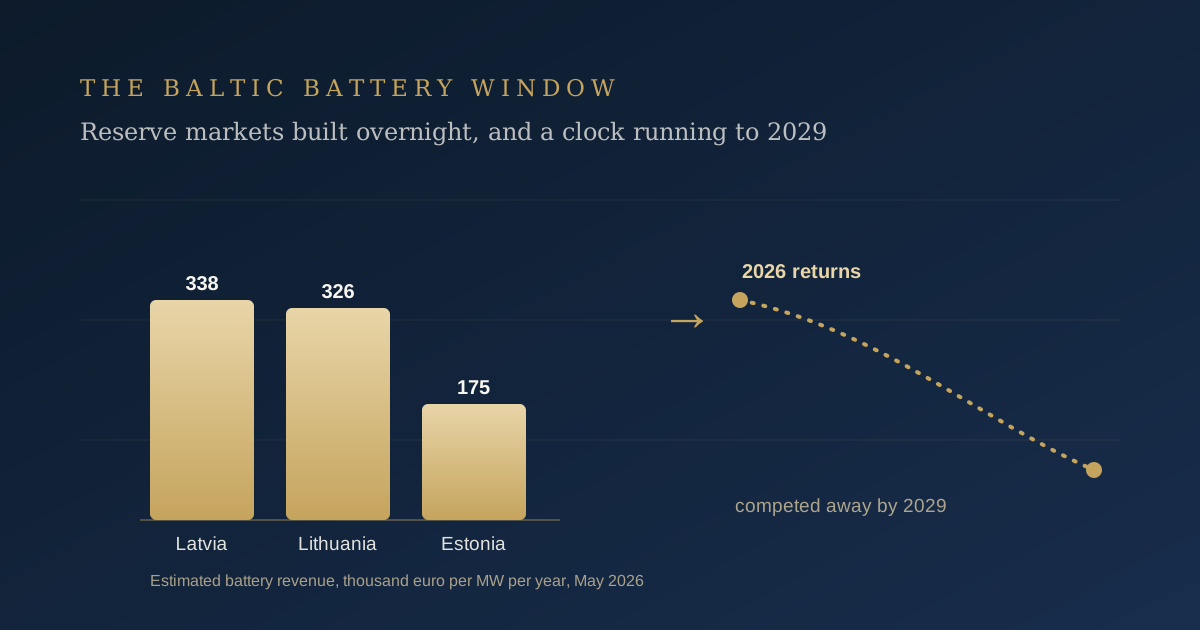
Fifteen months after the Baltics unplugged from Russia and began running their own grid frequency, the reserve markets they stood up in weeks are paying like scarcity. They are scarce. Here is how long that lasts and what to underwrite on.

7 July 2026 · 7 min read

Market Analysis

Where Nordic Battery Revenue Is Actually Moving in 2026

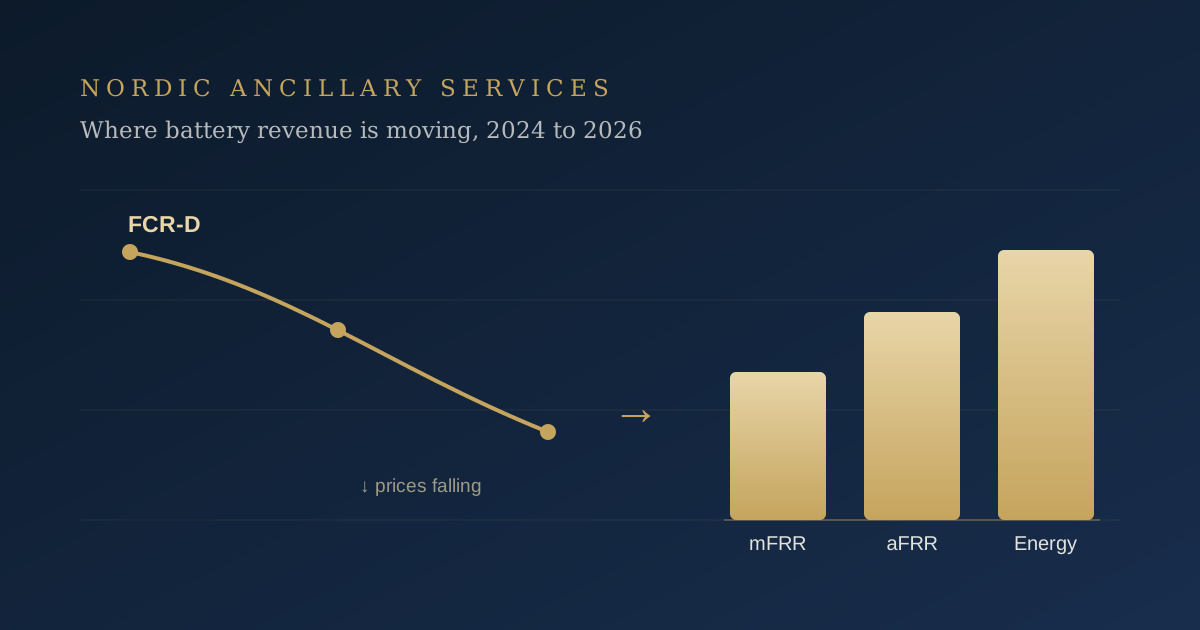
FCR-D made Nordic batteries bankable. Now it is saturating and the revenue is shifting toward mFRR, aFRR and the energy markets. Here is what that means for the stack.

5 June 2026 · 8 min read