Denmark's Grid Bill Would Rank Storage Third. Grid-Friendliness Is the Lever.
23 July 2026 · 8 min read · Auranova Ventures
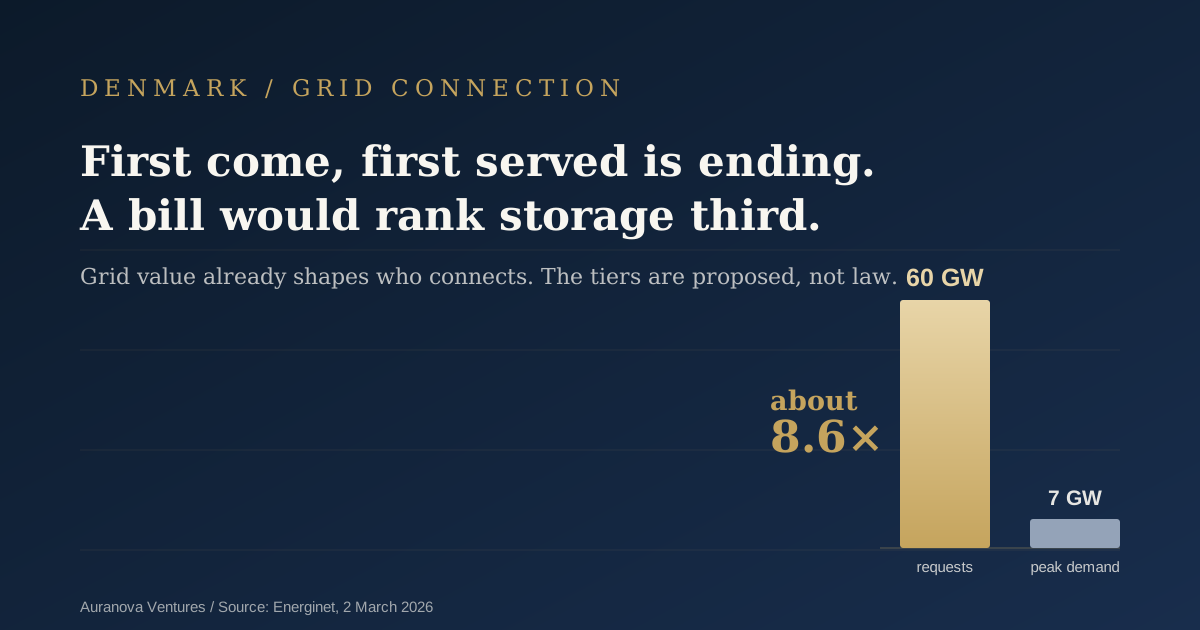
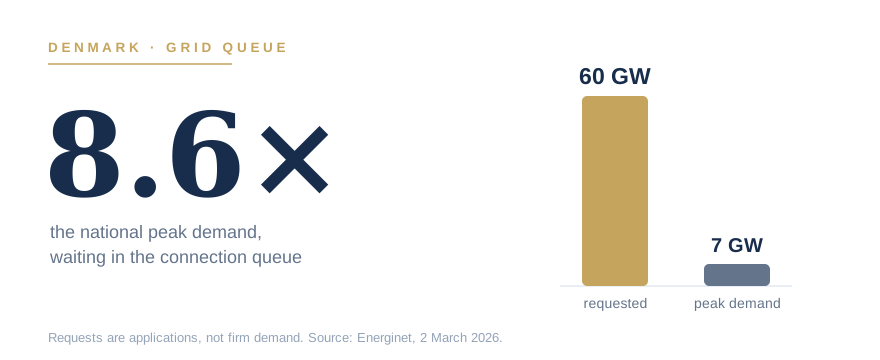
Denmark has roughly 60 gigawatts of new electricity consumption sitting in its connection queue, against a system whose demand peaks near 7 gigawatts. That queue is applications, not firm demand, so much will never be built. Even so, it swamps what Energinet, the operator of Denmark's high-voltage grid, can connect soon. First come, first served is ending. For larger connections, grid value already helps decide who moves. A proposed law would go further, ranking battery storage into a lower tier that can be made to wait or refused.
The development
For years grid access in Denmark ran first come, first served: the earliest filer won, not the best-sited project. Then very large loads piled in, data centres, battery projects and Power-to-X plants, which use electricity and water to make hydrogen, then fuels or chemicals. By early 2026 the queue for larger connections had outrun the grid. Energinet moved to ration it.
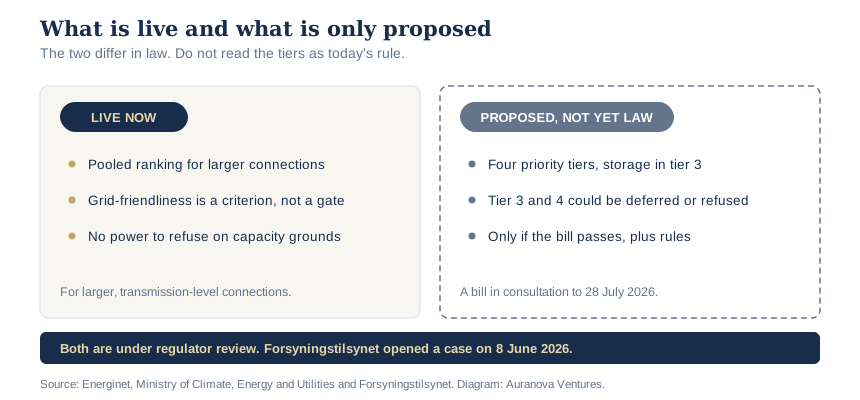
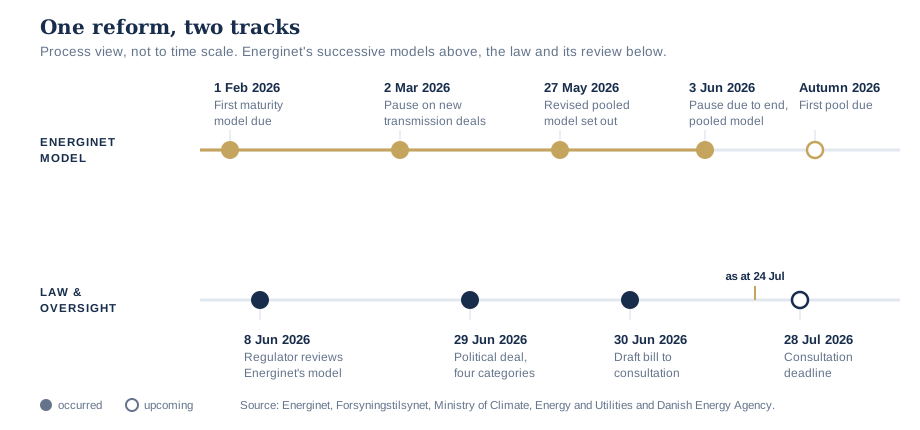
What Energinet does now applies to larger, transmission-level connections, not the ordinary household or small-business connections that still go ahead in many places. A first maturity model, announced for 1 February 2026, ranked those applications on readiness rather than filing date. On 2 March it paused new transmission connection agreements. On 27 May it set out a pooled model, weighing applications together on maturity, on progress and on grid-friendliness (how much a project strains or relieves the local grid), against the transmission capacity that actually exists. The three-month pause was due to end in early June, but Energinet expects to sign no new transmission agreements before the first pool clears in autumn. For very large connections that need new grid built behind them, that wait can run five to ten years. Under current law, though, Energinet cannot prioritise some project types over others or refuse a connection purely for lack of capacity. Grid-friendliness is a criterion in the queue, not yet a gate.
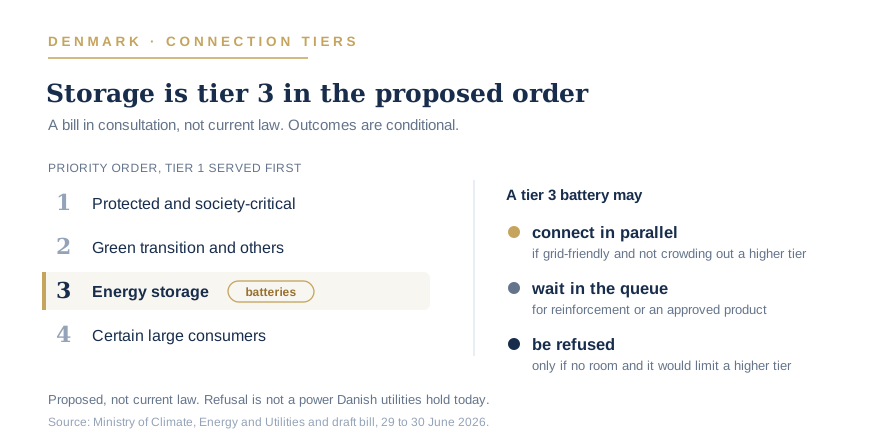
The bigger change is proposed, not yet law. On 29 June a broad political understanding set the intent. On 30 June the ministry published the draft bill for consultation to 28 July. The bill does two things. It lets utilities refuse a connection when capacity is short. It also empowers the minister to set the category-ranking rules, which for now live in the understanding and the bill's notes as the intended first use. Category 1 is protected and society-critical needs. Category 2 is the green transition, direct electrification, renewables, carbon capture and storage (CCS, capturing carbon dioxide and storing it underground), hydrogen and Power-to-X, plus other projects. Category 3 is projects whose main job is to serve the system, where standalone batteries are meant to sit. Category 4 is certain large consumers. If enacted with its implementing rules, the scheme would let a utility refuse a category 3 or 4 request where there is not enough capacity and the connection cannot be fitted without limiting higher-priority needs. That refusal power does not exist in Danish law today.
What it actually means
For a grid-scale battery, two things follow. First, grid value already matters: in Energinet's live queue, a project that eases its local grid ranks above one that strains it. Second, if the bill passes, storage starts a rung down in category 3, facing three outcomes rather than a simple yes. It may connect in parallel when it is grid-friendly enough not to crowd out higher tiers. It may wait while the network is reinforced or a product is approved. Or it may be refused when its node cannot make room without squeezing a higher tier.
A node, the point where a project joins the grid, is not simply full or empty. Its room shifts with direction (charging can help where discharging hurts), time of day, what else is running and whether reinforcement or a non-firm product is on the table. So grid-friendliness is a lever, not a fixed verdict. When we underwrite a Danish battery, connection stops being a date and becomes a spread of connect, wait and refuse. As an illustration, not a forecast: the early years carry most of a battery's revenue. At a 9 percent discount rate a euro of income four years out is worth about 70 cents today, so a slip from 2027 to 2031 strips about a third off the value of those first years. We size the real number per node. The direction never changes.
None of this is settled. Energinet's live model is under review: on 8 June the regulator, Forsyningstilsynet, opened a case on whether Energinet may prioritise at all without prior approval. The bill is only in consultation. Its backers are not bound to the final text. The categories would still need implementing rules. A developer is underwriting against a model that is live but contested and a law that is drafted but not passed.
Who is affected and how differently
A developer sitting on old applications is exposed, though not wiped out. Energinet is re-sorting the queue, not clearing it. Projects already sent a connection agreement fall outside the new model. An early filing with nothing behind it travels light now; a mature, well-sited project moves up.
For storage the tier is the risk. A standalone battery is meant for category 3, one of the two tiers the bill would let a utility refuse, so it would carry a connection risk a category 2 renewables project would not. The tier is not automatic: classification looks at a project's main function and how much of its capacity is genuinely system-serving, so a co-located or dual-purpose battery may land elsewhere or be split. Grid-friendliness is what pulls a category 3 project back up, but it buys a chance to connect in parallel or a place in the queue, not a guarantee.
Investors face a repricing. Buying a Danish pipeline is no longer buying an application and a date. It is asking which tier a project would fall into, how grid-friendly it really is, how crowded its node is and whether it already holds an agreement. In the diligence we run, an early filing with no land and no maturity is worth far less than a mid-stage, grid-friendly project with a real non-displacement case. For utilities and policymakers the tension is plain: ration a scarce grid without freezing the electrification the whole plan is meant to speed.
What to do about it
A few moves for this quarter.
Price grid value in now. In Energinet's live queue it already helps your ranking, so a documented case that your battery relieves its specific node, rather than a vague system-benefit claim, is worth building today.
Treat the tiers as a scenario, not a rule. Work out which category each project would fall into if the bill passes. Stress the model for the wait and refuse outcomes, not just a clean connection.
Underwrite connection as a range. Weight connect, wait and refuse by node and category. Check the equity case at the slow and refused ends. If it only works on a clean 2027 connection, it does not work.
Rebuild diligence around tier, grid value and node. Ask which category a target would land in, how crowded its node is and whether it already holds an agreement.
Test the flexible routes. Co-location and limited or interruptible grid access can sometimes cut the firm capacity a project needs (the capacity guaranteed at all times), but eligibility depends on voltage, direction and the operator, so confirm what applies to you.
Where we come in
This is the kind of question we at Auranova Ventures work through with developers and investors across the Nordics, Baltics and wider Europe. In Denmark a connection has become a range of outcomes shaped by tier, grid value and the node. If you are sizing a Danish project or pricing a pipeline and want a second read on where each asset lands under the live model and the proposed tiers, reply or start a conversation.
The consultation closes on 28 July and the detail will land over the coming weeks. We will be following it closely and will come back to this as the rules take shape.
Which of your Danish projects would survive being ranked third? We read every reply.
Sources
- Energinet, "Vaek med forst til molle", new maturity-based prioritisation model announced for 1 February 2026: https://via.ritzau.dk/pressemeddelelse/14695403/vaek-med-forst-til-molle-prioritering-skal-sikre-hurtigere-gron-omstilling?lang=da&publisherId=10304728
- Energinet, temporary pause on new transmission connections (2 March 2026), 60 GW of requested new consumption against about 7 GW maximum demand: https://via.ritzau.dk/pressemeddelelse/14813920/energinet-indforer-midlertidig-pause-i-nye-nettilslutninger-og-saetter-turbo-pa-akutpakke?lang=da&publisherId=10304728
- Energinet, new pooled model for larger connections on maturity, progress and grid-friendliness, no new transmission agreements before autumn, five to ten year horizon for some very large connections (27 May 2026): https://via.ritzau.dk/pressemeddelelse/14952374/energinet-indforer-ny-model-for-storre-tilslutninger-og-vil-forst-underskrive-nye-nettilslutningsaftaler-til-efteraret?lang=da&publisherId=10304728
- Forsyningstilsynet, supervisory case on whether Energinet may apply its prioritisation model without prior approval (8 June 2026): https://forsyningstilsynet.dk/nyheder/2026/jun/forsyningstilsynet-indleder-tilsyn-med-energinets-prioriteringsmodel-for%E2%80%AFstoerre-tilslutninger
- Ministry of Climate, Energy and Utilities, political understanding on an emergency plan for the electricity grid, four connection categories with storage in category 3 (29 June 2026): https://www.kefm.dk/Media/639183149168897728/Politisk%20forstelse%20om%20en%20akutplan%20for%20elnettet.pdf
- Danish Energy Agency, draft bill on prioritising grid capacity (delegated power, parallel connection across categories, conditional refusal of categories 3 and 4), consultation published 30 June 2026, deadline 28 July 2026: https://prodstoragehoeringspo.blob.core.windows.net/db204b8a-7325-499d-b0a8-31008244f75a/Udkast%20til%20lovforslag.pdf
- Danish Energy Agency, consultation landing page: https://hoeringsportalen.dk/Hearing/Details/71288
- Danish Energy Agency, Power-to-X definition: https://ens.dk/en/supply-and-consumption/power-x